
The History of the Minaudière
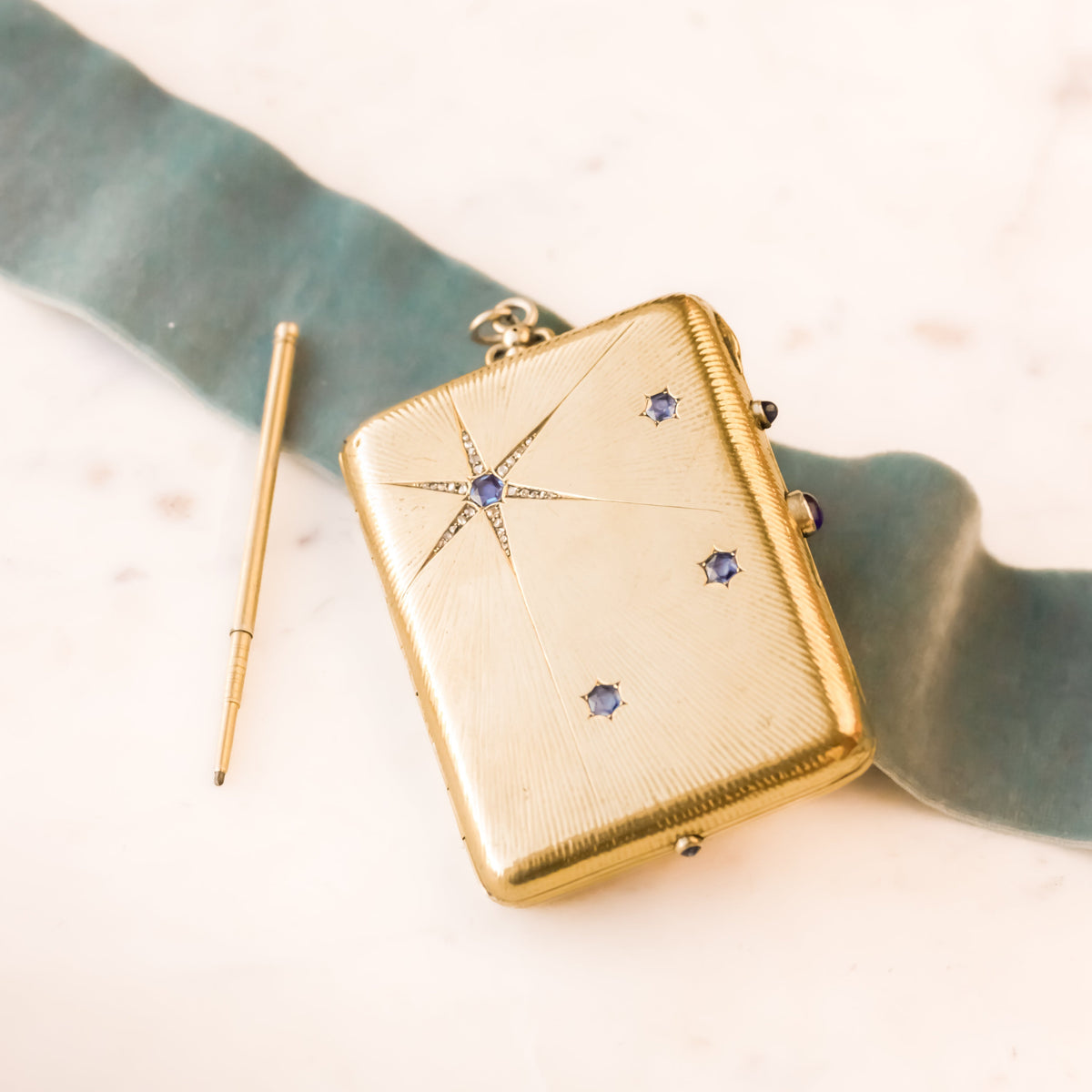
This minaudière is French in origin and dates to the early 20th century. It is crafted in silver-gilt and stamped 800, with an additional maker's hallmark attributed to Louis Kuppenheim. The exterior is set with sapphires and diamonds in a celestial pattern, and the push-button clasp features a synthetic sapphire cabochon, which likely a later replacement.

The interior opens to reveal two hinged fitted compartments, a rectangular frame, and a hinged trefoil clip with a concealed front pencil—functional elements typical of refined vanity cases of the period. The piece measures 3.34 by 2.36 inches and has a gross weight of 194 grams.

This piece has light wear in accordance to its age and is in overall phenomenal condition with light rubbing to the decoration.
THE HISTORY:
A minaudière—pronounced mee-noh-dee-AIR—is far more than an evening clutch. Its name comes from the French minauder, meaning “to simper” or “to behave coquettishly,” a playful nod to the glamorous women who carried them. Born from the flapper era’s portable vanity cases and perfected in 1933 by Van Cleef & Arpels, the minaudière became the emblem of the modern, independent woman. Unlike soft evening bags, these structural objets d’art—rendered in precious metals and often fitted with compartments for lipstick, opera glasses, cards, or cigarettes—bridged jewelry and accessory. They were functional time capsules of an era defined by Jazz Age freedom, Art Deco geometry, and the rising autonomy of women post-WWI.

This rare example was crafted by Louis Kuppenheim, one of Germany’s most revered makers of luxury silver, gold, and enamel accessories. Founded in 1854 in Pforzheim, the Kuppenheim workshop gained acclaim for its exceptional cigarette cases and vanity objects, producing pieces for leading houses such as Cartier. After Louis Kuppenheim’s passing in 1889, his sons expanded the firm’s reputation across Europe, opening a Paris storefront and earning accolades including a gold medal at the 1900 Universal Exhibition. By the early 1900s, their work was synonymous with refined craftsmanship, impeccable enameling, and innovative design—values seen throughout this minaudière.


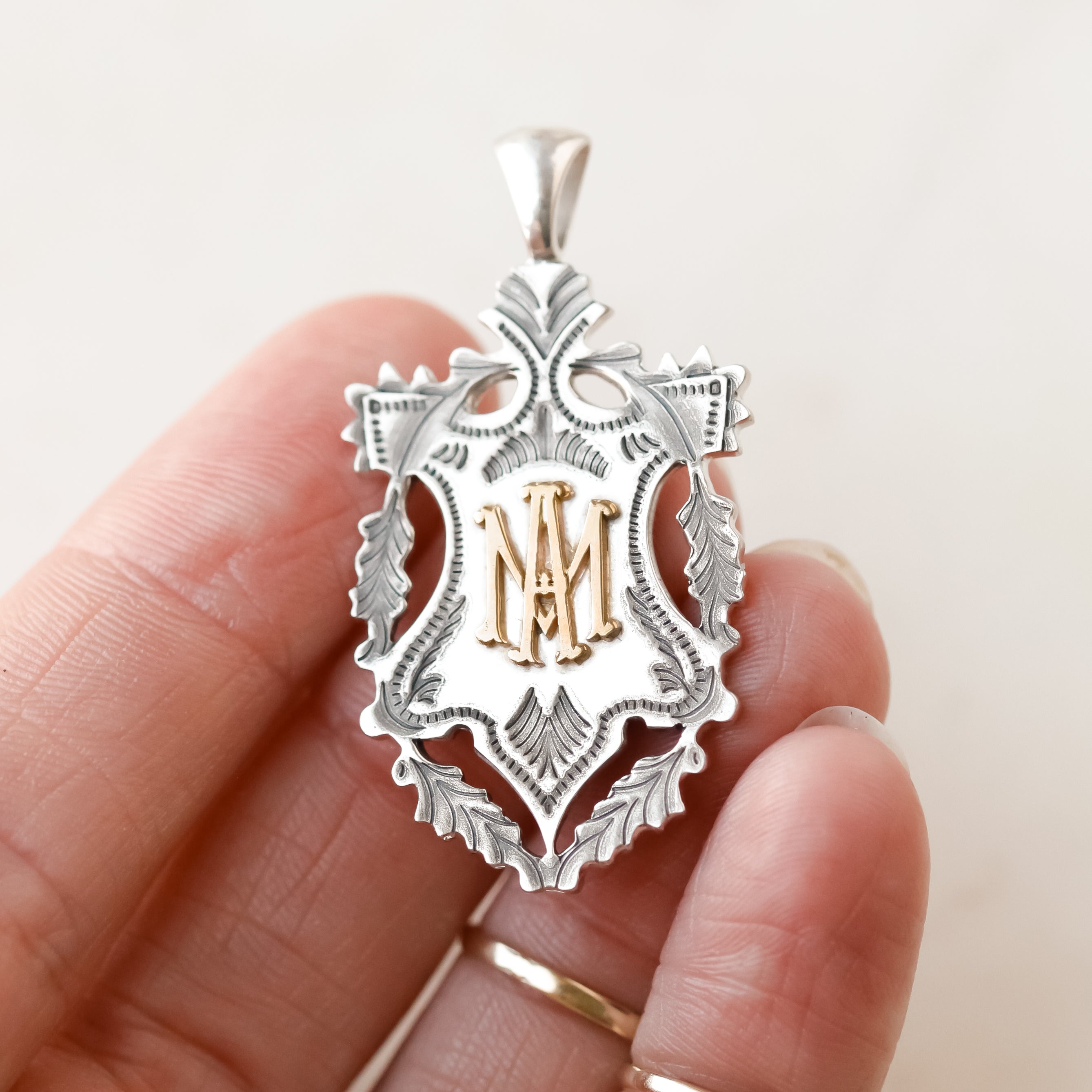
Examples of Kuppenheim's other works.
Dating to circa 1910, this minaudière showcases Kuppenheim’s signature precision: a gilt silver body, architectural lines, and finely set decorative stones along the case edges—details consistent with known Kuppenheim works from the period.


Elegant, compact, and beautifully engineered, this minaudière embodies the height of early 20th-century European luxury. Today, it stands as both a wearable jewel and a collectible object—an exquisite artifact from a house that produced over 100,000 pieces during its 82-year history, yet left behind only a limited number of surviving treasures.